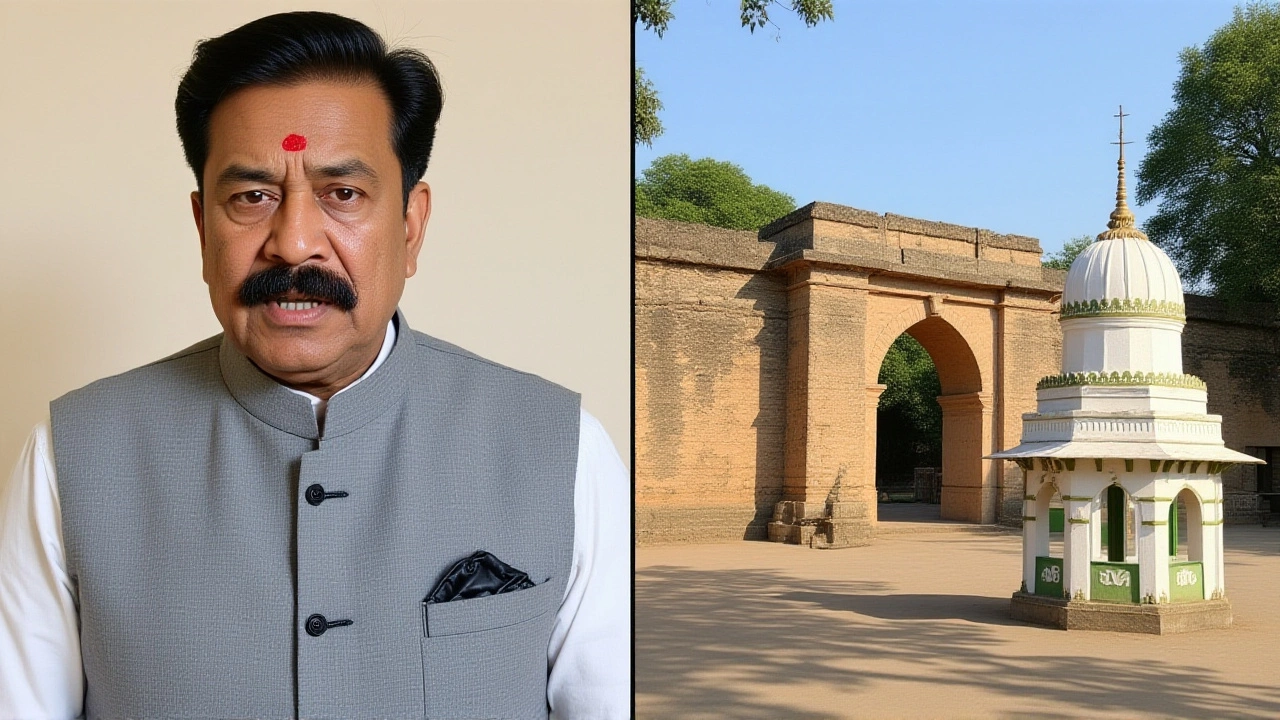
When the Madhya Pradesh High Court's Indore bench delivered its verdict on the Bhojshala dispute, it didn't just settle a legal argument—it closed a chapter that had lingered for decades. The court ruled that the ancient structure in Dhar, central India, is indeed a temple dedicated to Goddess Vagdevi, not merely an architectural ruin or a secular hall as some had argued.
The decision, handed down recently, has been hailed by many as a vindication of historical truth backed by science. Here’s the thing: this wasn’t a ruling based solely on faith or political pressure. It was grounded in concrete evidence from the Archaeological Survey of India (ASI), whose technical report played a pivotal role in swaying the judges.
Science Meets History at Bhojshala
For years, the identity of Bhojshala was shrouded in ambiguity. Located in Dhar, about 100 kilometers from Indore, the site features massive stone pillars and intricate carvings that hint at its grand past. But what exactly was it? A library? A dining hall? Or a temple?
The ASI stepped in with a comprehensive, technology-driven investigation. They didn’t just look at surface-level artifacts; they analyzed inscriptions, architectural styles, and religious iconography embedded within the stones. Their findings were clear: the structure contained definitive symbols of Hindu worship, including depictions of deities and ritualistic layouts consistent with temples built during the reign of King Bhoj in the 11th century.
"Scientific evidence doesn't lie," one observer noted. "The layers of doubt that had covered this site for decades were peeled away by data." This approach marked a shift in how heritage disputes are resolved in India—moving away from oral traditions alone toward forensic archaeology.
A Legal Victory After Centuries of Struggle
According to reports from outlets like VSK Bharat, the Hindu community had been fighting for recognition of Bhojshala as a place of worship for centuries. While exact timelines vary, sources describe the struggle as spanning hundreds of years, reflecting deep-rooted cultural attachment to the site.
The recent judgment by the Indore bench of the MP High Court has been described as a "golden chapter" in Indian judicial history. By acknowledging the temple status, the court effectively ended prolonged litigation and allowed devotees to resume rituals without fear of legal challenge.
This isn’t the first time such a precedent has been set. Recall the Ayodhya verdict in 2019, where the Supreme Court also relied heavily on archaeological and historical records to determine land rights. In both cases, the judiciary leaned on expert analysis rather than partisan narratives.
Reactions From All Sides
Across social media platforms, reactions have been swift. On YouTube, commentator Muhammad Faiz Khan called the outcome a "victory for truth" at Bhojshala, praising the government's seriousness in addressing long-pending issues. He drew parallels between the Ram Janmabhoomi case and Bhojshala, suggesting a broader pattern of resolving heritage conflicts through decisive action.
Hindu religious leaders celebrated the move, viewing it as restoration of sanctity to a sacred space. Meanwhile, Muslim community representatives expressed mixed feelings, though no official statements from major organizations have yet emerged detailing specific objections or support.
Interestingly, while some political figures may have commented publicly, there is no verified record of MLA Rameshwar Sharma making any particular appeal to the Muslim community regarding this verdict. Speculation exists, but facts remain scarce.
What Does This Mean Going Forward?
The implications extend beyond Dhar. If other contested sites follow suit, we could see more courts prioritizing scientific validation over ideological claims. For historians and archaeologists, this sets a powerful precedent: let the stones speak, then let the law decide.
Moreover, it raises questions about preservation versus access. Now that Bhojshala is recognized as a temple, will increased foot traffic impact its structural integrity? Will conservation efforts need upgrading? These are practical concerns that local authorities must address swiftly.
Frequently Asked Questions
Why did the ASI play such a crucial role in this verdict?
The ASI conducted a detailed technical survey using modern tools to analyze inscriptions, carvings, and layout patterns at Bhojshala. Their report provided irrefutable proof that the site functioned as a temple, which became the cornerstone of the court’s decision. Without this empirical backing, the legal battle might have dragged on indefinitely.
Who was King Bhoj, and why is he linked to Bhojshala?
King Bhoj ruled Malwa region in the early 11th century and was known for patronizing art, literature, and architecture. Historical accounts suggest he commissioned several structures, including what is now believed to be the Bhojshala temple. His name appears frequently in regional folklore and epigraphic records tied to the area.
How does this compare to the Ayodhya verdict?
Both cases involved longstanding disputes over religious sites claimed by multiple communities. In each instance, courts turned to archaeological evidence alongside historical documentation to reach their conclusions. The Ayodhya ruling granted the site to Hindus after finding traces of a pre-existing temple, much like the Bhojshala decision affirmed its temple status based on similar physical proofs.
Will tourism increase significantly at Bhojshala now?
Likely yes. With formal recognition as a functioning temple, pilgrims and tourists alike are expected to visit in larger numbers. Local officials will need to manage crowd control, maintain infrastructure, and ensure minimal damage to the ancient stonework—a delicate balance between accessibility and preservation.
Are there plans to restore damaged parts of Bhojshala?
While no public announcement has been made yet, experts recommend immediate stabilization measures followed by careful restoration guided by original design principles. Given the site’s significance, funding could come from state heritage budgets or private donations once administrative frameworks are established.